

Improve Darts Throw: The 3 Technical Issues I See Again and Again

Updated: Aug 27
Improve darts throw, what I see from coaching in 2026. I have worked with over 50 players this year already. Most players immediately look at their stance. That makes sense. Foot position is visible, easy to copy, and one of the first things players are taught. But from my experience through practice sessions, competitions, and watching countless players at the oche, the real issues often sit higher up the body.
Alongside the body, this article delivers 3 typical technical issues I see and how to avoid them!
I keep seeing the same three problems repeated by players who are desperate to improve but cannot understand why their averages stay flat. They work hard on where their feet go, yet their upper body changes from visit to visit. That disconnect makes repeatability almost impossible.
In my own journey, and in what I regularly notice in others, the biggest barriers to an improved darts throw are shoulder and hip misalignment, elbow instability, and poor shoulder control through the release.
This article breaks down those issues in a practical but evidence-based way, so you can build a more repeatable action and genuinely improve darts throw performance over time.
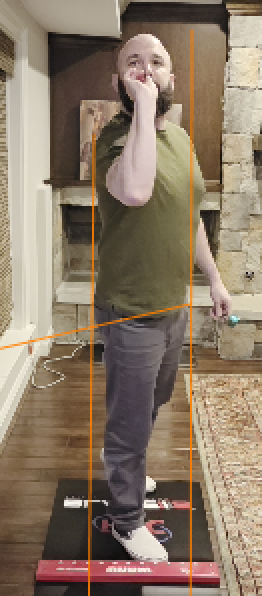
Improve Darts throw 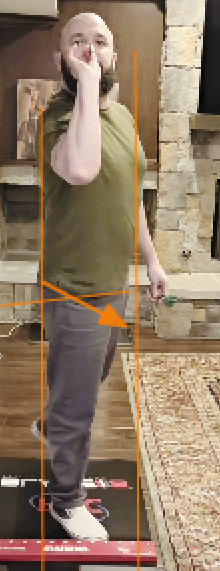
Improve Darts throw Improve Darts throw
1. Foot Position Means Nothing Without Shoulder and Hip Alignment
One of the most common mistakes I see is players becoming obsessed with getting their feet in exactly the same place, while everything above the waist changes on every visit.
I watch players line their lead foot up beautifully with the same tile on the floor, the same angle on the oche, the same pressure through the toe, yet their hips are slightly open on one visit and more square on the next. Then the shoulders follow a different line entirely.
From a biomechanical point of view, this is hugely important.
The throwing arm works as part of a kinetic chain. If the hips and shoulders are not aligned consistently to the intended target line, the arm has to compensate mid-action. That compensation creates micro-adjustments in wrist angle, elbow path, and release timing.
From my own experience, the best way to improve darts throw mechanics here is to stop thinking of stance as just a foot issue. Instead, think of your body as one connected alignment system.
I always encourage players to check three things before every throw:
Is the lead foot in the same place?
Are the hips pointing in the same direction?
Are the shoulders stacked on the same target line?
When all three are consistent, the arm can repeat naturally. When only the feet are consistent, the throw becomes a compensation exercise.
That is often why players say, “It felt different even though my stance was the same.”
Technically, the stance was not the same at all.
2. Elbow Stability: The Drift to the Left on the Way Down and Up - Improve Darts throw
The second issue I repeatedly notice, especially in right-handed players, is elbow drift to the left during both the backswing and the return path.
This is one of the clearest reasons players struggle to improve darts throw accuracy.
Ideally, the elbow should behave like a stable hinge. It should stay on the intended vertical plane, allowing the forearm to move smoothly through flexion and extension.
What I often see instead is the elbow moving left on the way down, then continuing to track left as the dart comes forward.
That lateral movement changes the release line before the dart has even left the fingers.
Academically, this creates variability in the sagittal plane and introduces unwanted frontal plane movement. In practical terms, it means your dart is starting from a different launch corridor each time.
The result is familiar to most players:
Darts dragged into the 5 bed
Overcorrection into the 1 bed
Inconsistent grouping despite “feeling smooth”
In my own practice, I found that focusing on elbow stillness rather than elbow height gave much better results.
A useful cue is to imagine the elbow sitting inside a narrow invisible channel. The forearm can move, but the elbow point itself should not wander left or right.
If you can reduce that side drift, you immediately improve darts throw direction and tighten your grouping.
3. Shoulder Stability Through the Push Phase
The third major issue is shoulder instability during the push through the dart.
This is the one that often separates tidy practice throws from genuine match consistency.
Many players start the throw in a stable position but lose structural control as they accelerate forward. The shoulder lifts, rotates, or subtly collapses as they try to add force.
That movement changes the arm slot at the most important moment, the release.
From a movement science perspective, the shoulder should act as a stable proximal anchor point while the elbow and forearm create the controlled motion. If the shoulder itself starts moving excessively during the push phase, the distal segments lose precision.
In simple terms, if the shoulder moves, the hand path changes.
I see this most when players try to “push harder” for treble 20s under pressure. Instead of trusting the throw, they recruit extra shoulder movement.
The dart then tends to sit high, drift wide, or lose its natural entry angle.
To improve darts throw consistency, I always come back to one principle: let the shoulder support the movement, not create it.
The push should feel as though the forearm extends through a quiet, stable shoulder base. The more still that shoulder remains, the more repeatable the release becomes.

Why These Three Issues Matter More Than Most Players Think
What makes these faults so damaging is that they often happen in tiny amounts.
A slight hip change. A minor elbow drift. A subtle shoulder lift.
Individually, each seems insignificant.
Together, they make repetition almost impossible.
That is why players can throw three perfect darts followed by three that feel completely different. The problem is rarely effort. It is variability in the movement pattern.
My experience has taught me that players improve fastest when they stop chasing perfection in isolated positions and instead build repeatability through the whole chain.
If your goal is to improve darts throw mechanics, focus on these priorities:
Match shoulder and hip alignment to your foot position every visit
Keep the elbow stable on a single throwing plane
Maintain shoulder control through the push and release
Those three changes alone can transform consistency.
Final Thoughts from DartsMatt on how to Improve Darts throw
If there is one thing I have learned, it is that better darts is rarely about dramatic changes. It is about removing the small inconsistencies that creep in over time.
The players who truly improve darts throw quality are the ones who become obsessed with repeatable movement, not just comfortable movement.
Feet matter, of course, but the real gains come from what the shoulders, hips, and elbow are doing above them.
The next time your throw feels off, do not just look down at your feet.
Look at the full chain.
That is usually where the real answer is.
About DartsMatt
I’m DartsMatt, a competitive player, content creator, and coach who is passionate about helping players build more repeatable, confident throws through practical technique and proven fundamentals.
Through my YouTube channel, live tournaments, online leagues, and one-to-one coaching.
I work with players of all levels to identify the small movement inconsistencies that hold averages back. If you recognised any of the issues in this article and want personalised support to improve your darts throw, you can book a lesson with me and we’ll break your action down step by step to create a more stable, reliable game under pressure.

